This article may contain affiliate links. I may earn a small commission at no extra cost to you. Learn More

Menu

If your water has that sharp disinfectant edge, you don’t just taste it once and forget it. It follows you into coffee, tea, and that first sip from a bottle you refilled on the way out the door.
This Cloud RO review is a practical walk-through of what you’ll actually live with if you add this under-sink reverse osmosis system. You’ll see how it changes your day at the faucet, what the filtration approach is doing behind the scenes, and how much “upkeep brain space” it asks from you over time.
Cloud RO is built for drinking and cooking water, not the whole house. You install it under the sink and use a separate small faucet for the water you drink, cook with, and send to your fridge or ice maker. That division is the point. It keeps the system focused on the water you taste and ingest the most.
If you’re trying to fix showers, laundry, and every tap in the home, this isn’t the style of solution that matches that goal. Cloud RO fits better when your biggest annoyance is what comes out of your kitchen tap into your glass, kettle, or stockpot, and you want that one area to feel “handled.”
In day-to-day life, this approach tends to feel satisfying fast because it attaches to routines you repeat constantly. Fill a bottle. Make oatmeal. Brew coffee. The stuff you do on autopilot starts using cleaner-tasting water without extra steps.
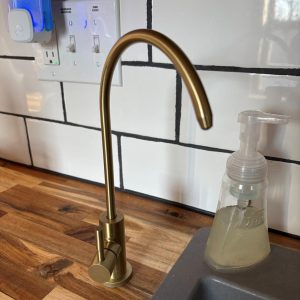
The dedicated faucet is the part you’ll interact with, and it’s also the part you’ll appreciate when you’re busy. You’re not waiting for a pitcher to finish filtering or realizing the jug stash ran out after you already started dinner. You just turn the RO faucet and get your drinking water.
Where it shows up most is in “water as an ingredient” moments. Coffee and tea stop carrying that disinfectant edge. Ice tastes more neutral. Cooking water for rice or pasta doesn’t drag the tap’s flavor into the food.
It also changes how you hydrate. When it’s easy to grab a clean-tasting glass, you tend to do it more often because there’s no friction. This is one of those details you’ll either love immediately or never think about… until you’re somewhere without it.
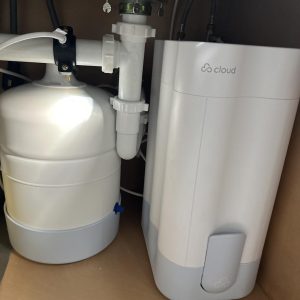
Cloud RO starts with a 5-micron sediment filter. That’s the first line of defense for visible and gritty stuff like dirt and rust. In practice, that means you’re not sending particle-heavy water into finer filtration stages, and you’re not dealing with that “why does my water feel dusty?” moment when you pour a glass. [1]
Next comes a 1-micron carbon block aimed at chlorine, disinfectant byproducts, and VOCs. This is the stage that tackles the tap-water smell and the harsh bite that gets louder in hot drinks. You’ll notice it when you fill a cup for tea and the steam doesn’t carry that chemical note up to your face.
That carbon stage also includes anti-scale properties. The upshot is steadier, more consistent operation over time in homes where mineral buildup is part of the background noise. You’re not signing up for a system that’s fine on day one and fussy later because scale slowly wins.
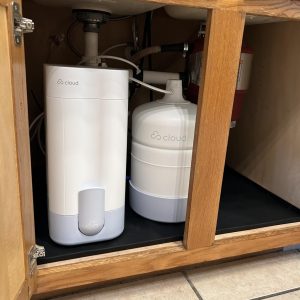
The heavy lifting comes from the reverse osmosis membrane, and Cloud RO carries NSF/ANSI 58 system certification. [2] It also operates with a 98% TDS reduction rate, which points to a strong reduction of dissolved solids, the tiny stuff you don’t see but often taste.
What you’ll notice is a “cleaner base” for anything water touches. Coffee tastes less sharp. Tea feels smoother. Foods that soak up water, like rice, end up tasting more neutral because the water going in isn’t bringing as much dissolved material with it.
This matters most if you’re choosing RO because you want more than a surface-level taste fix. Carbon-only solutions often help with smell and some taste issues, but RO is the route people pick when they want a deeper reset in how their drinking water behaves.
Two things shape how fast an RO system feels: how much it produces over a day and whether it stores ready water. Cloud RO uses a membrane designed for 80 gallons per day, with actual production up to 50 gallons per day. In normal use, that’s built to keep pace with drinking and cooking needs without turning hydration into a scheduling exercise.
On the “ready water” side, there’s a 2.8-gallon holding tank. So instead of waiting on the membrane in real time, you’re often pulling from stored purified water when you turn the faucet. That’s a big part of why RO can feel convenient instead of slow.
At the faucet, flow is rated at 0.625 gallons per minute. In everyday terms, bottles and cooking pots fill at a pace that feels usable, not like a slow drip that tests your patience. If you’ve dealt with RO systems that feel painfully sluggish, this is the kind of spec you feel in your hands every day.
If you’ve been reading Cloud reverse osmosis reviews and worrying about waste, Cloud RO uses an integrated permeate pump and is built around a low 1:1 waste ratio. That’s a big deal if you’ve avoided RO because you didn’t like the idea of a lot of drain water every time you pour a glass.
In practice, it makes the system feel more efficient while still delivering the RO style of purification. You’re not choosing between “great-tasting water” and “this feels wasteful” as a constant tradeoff.
This is especially reassuring if your household goes through a lot of drinking water. When you’re filling bottles daily, you want the whole setup to feel reasonable, not like you’re paying an invisible penalty every time you hydrate.
Cloud RO supports outlet pressure in the 40–45 psi range. The practical impact is a more responsive feel at the RO faucet, so you’re not standing there watching a thin stream crawl into a glass.
That pressure support also matters for a fridge or ice maker connection. The system supports that kind of setup, so your dispenser and ice routine stay convenient instead of turning into a slow-motion chore. You end up with cleaner-tasting ice without losing the “push the lever and go” rhythm.
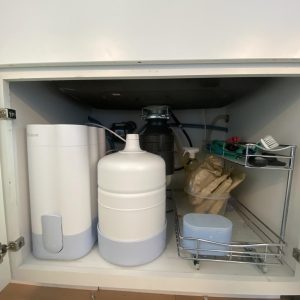
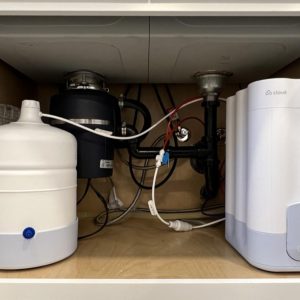
Placement flexibility is part of this, too. The system supports under-sink installation and also supports a basement install layout, which helps if your under-sink cabinet is tight or you prefer keeping equipment out of the kitchen workspace.
After RO does its job, Cloud RO adds a remineralization stage. It puts minerals like calcium, magnesium, potassium, sodium, zinc, and other trace minerals back into the water. The result is water that tastes clean without landing overly flat or “empty” when you drink it straight. [3]
This stage also raises pH to about 7.5–9.5. The exact number varies based on contact time, temperature, and where the post-filter is in its life, but the everyday takeaway is simple: you get a more pleasant finish that works well for sipping and for flavor-sensitive routines like coffee and tea.
If you’ve tried ultra-stripped RO water and didn’t love the taste, this is the part that usually changes your mind. It keeps the clean profile while giving the water a more natural feel in the glass.
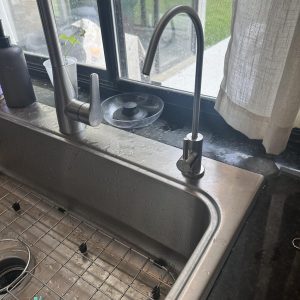
Cloud RO is designed to fit standard under-sink cabinets and uses a dedicated faucet at the counter. The faucet needs a 0.5-inch to 1.25-inch hole, and many kitchens already have a usable opening from a sprayer or soap dispenser. That little detail often decides whether the install feels easy or annoying, so it’s worth checking your sink layout before you get excited.
One convenient twist is power. This system runs on a replaceable battery pack, so you don’t need an electrical outlet under the sink. For a lot of kitchens, that removes a common headache right away.
Install time typically lands in the 30–60 minute range, and the modular design helps keep the under-sink workspace manageable as you assemble it. Once it’s running, internal sensors track water quality and consumption, and the Cloud app shows system status, filter status, tank level, tank pressure, and battery health. You’ll also see TDS monitoring at three points: at the inlet, after RO, and after remineralization, so you’re not guessing whether the process is doing what it should.
If you’re comparing Cloud RO reviews because you want maintenance to feel straightforward, filter replacements follow your actual usage and water quality rather than a fixed calendar date. A typical cadence is about 9–12 months for a family of four. The battery pack swaps alongside filter replacement, so the monitoring stays powered without extra planning. You also get a 5-year warranty and human support, which helps the whole setup feel like a dependable appliance instead of a DIY science project.
Related Water Filter Guides:
Cloud RO is worth a serious look if you want under-sink RO that feels good to live with: cleaner taste, practical flow, and a routine that’s easier to track through the app than to guess on your own. It’s a particularly comfortable fit if you care about drinking water, cooking water, and ice quality, and you like the idea of seeing system status and filter timing without doing mental reminders.
If you’ve been browsing Cloud water filter reviews, scroll back up and match the faucet and space requirements to your kitchen, and you’ll be able to decide quickly whether this setup fits your day-to-day.
If you want the short version of a Cloud RO system review, it comes down to this: you’re buying cleaner-tasting kitchen water with a more efficient RO feel and clearer ownership tracking.

