This article may contain affiliate links. I may earn a small commission at no extra cost to you. Learn More

Menu

If your tap water tastes “fine” until you make coffee, fill an ice tray, or drink a glass at night—reverse osmosis is often the upgrade that finally makes it feel clean and consistent. It pushes water through an ultra-fine membrane, so what ends up in your cup starts from a much purer baseline.
This roundup helps you choose the right style for your kitchen and routine. You’ll see the difference between countertop systems you refill, and under-sink setups that give you a dedicated faucet and stored water on demand—plus what maintenance and monitoring feel like over time with the best reverse osmosis water filter styles.
To build this list, I compared product details to find options that make sense for everyday drinking and cooking. The goal here is simple: clear tradeoffs, practical benefits, and enough specifics to help you pick the one that fits your space and habits.
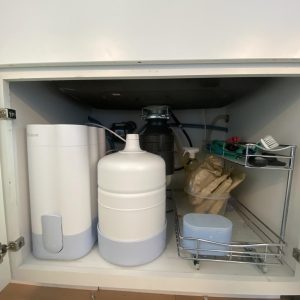
If you want an under-sink RO setup that feels modern and “in control,” this one stands out right away. It’s a strong contender when you’re narrowing down the best reverse osmosis system shortlist for a busy kitchen. You get a dedicated stainless steel, lead-free faucet and a 2.8-gallon holding tank, so pouring a glass feels immediate instead of waiting on filtration in the moment. That tank-based approach works especially well when you’re filling bottles back-to-back or grabbing water while you cook.
The way it handles pressure is built for day-to-day convenience. Outlet pressure runs at 40–45 psi and the system uses an integrated permeate pump, so you keep strong pressure for things like a fridge dispenser or an ice maker. Faucet flow is 0.625 gallons per minute, which makes a simple task—filling a glass—feel fast and normal instead of slow and fiddly.
Filtration stays focused and straightforward. A 5-micron sediment filter catches larger particles first, so the rest of the system doesn’t have to deal with grit. After that, a 1-micron coconut carbon block targets chlorine, disinfection byproducts, and VOCs, which typically shows up as a cleaner smell and a more pleasant sip.
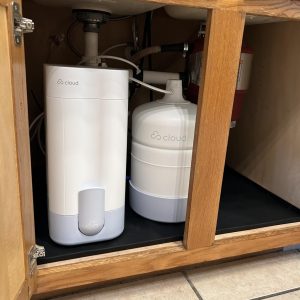
Then the RO membrane handles the deep filtration step. It’s NSF/ANSI 58 certified, rated for 80 gallons per day, and runs with a 1:1 waste ratio, so you’re getting true RO performance with an efficiency profile that’s easy to live with. The result is a system that feels purpose-built for daily drinking water, not just a “nice idea” you forget to use.
Where this system really changes the ownership experience is visibility. It uses TDS sensors at multiple points—at the inlet, after RO, and after remineralization—so you can actually see what’s happening to your water as it moves through the stages. Pair that with app tracking for filter status, water quality, tank fullness, and tank pressure, and you end up with far less guesswork in normal use.
Maintenance stays tidy in a surprising way: it’s battery powered. That means you don’t need an outlet under the sink, and you handle the battery pack alongside filter changes as one routine. Filter replacement timing depends on your usage and water quality, and for a family of four the typical cadence lands around every 9–12 months—so it’s structured, but not constant.
See my detailed Cloud RO reviews page if you'd like to learn even more.
Pros
Cons
If you like the classic under-sink approach—dedicated faucet, storage tank, and water ready when you need it—this system fits that pattern well. It’s a practical pick if you’re comparing the best reverse osmosis water filter system setups for steady, on-demand pours. It comes with a 4-gallon storage tank, so you get that satisfying “turn the faucet, fill the glass” experience without waiting for the membrane to produce water in real time.
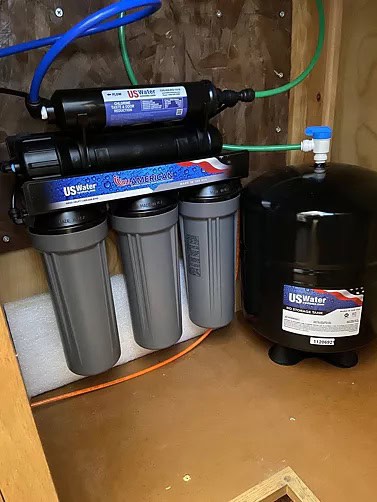
The RO membrane is rated at 100 gallons per day, which matters most after heavy use. When you’ve been refilling bottles, cooking, or topping off a pet bowl, a system like this refills the tank steadily in the background so your routine stays smooth.
The filtration stages are set up in a logical flow that protects performance. It starts with a 5-micron sediment filter to catch dirt, sand, and rust, which keeps the downstream filters from taking unnecessary wear. From there, carbon block filtration steps in to shape taste and smell before RO even happens.
One detail that matters for many households is how it handles disinfectant chemistry. This system includes a 1-micron special blend carbon block that targets chloramine, so you’re not stuck with that lingering “treated water” vibe in your drink. In daily use, that often means your water tastes cleaner even before the membrane does its deeper work. [1]
After the membrane, a post carbon filter polishes the water on the way out. That finishing step helps keep the final pour consistent, especially if you’re sensitive to aftertaste. The whole package is designed to feel like reliable kitchen infrastructure, not a fussy gadget.
If you want a different “finish” after RO, there’s a 6-stage version that adds a hydration-stage filter. It’s designed to raise pH into an 8.5–10 range and shift ORP into a negative range, so your water leans more alkaline-style instead of tasting flat. The system is rated for 95%–99% rejection of TDS, which supports that clean, stripped-down baseline many people want from RO.
Installation aims to keep the process approachable. You get color-coded tubing and only four connections, so it’s easier to stay oriented while you work. It includes a 1/4-inch John Guest quick-connect drain saddle, and essentials like a tube cutter and a filter wrench come in the kit, so you’re not hunting for basic tools mid-install.
Pros
Cons
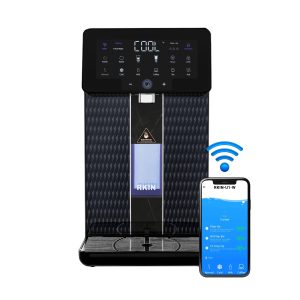
This one is for you if you want your RO system to feel like a full countertop water station. It’s worth a look when you’re deciding between the best home reverse osmosis system routes that go beyond basic dispensing. Instead of just filtering water, it gives you filtered cold water, instant hot water, and a negative ORP option powered by a hydrogen module—so you can go from “I want tea” to “cup filled” without the usual waiting.

In daily life, that convenience changes everything. You’re not boiling a kettle just to make one drink, and you’re not babysitting a slow dispenser when you want to refill a bottle. It turns water into an appliance-level routine that feels fast, consistent, and repeatable.
Inside, it layers technologies in a way that’s easy to understand: RO, UV, and the hydrogen module working together. The RO membrane is an encapsulated design rated at 200 gallons per day, which supports faster replenishing between pours. So when you’re using it frequently throughout the day, it’s built to keep up with that pace.
Testing coverage is broad and includes reductions for TDS, fluoride, lead, PFOA/PFOS, and both hexavalent and trivalent chromium. That matters because it’s not just chasing “better taste”—it’s addressing a range of concerns people often have when they start shopping for RO. The practical outcome is a more confident everyday water supply for drinking, cooking, and ice.
The app support adds a calm, “no guessing” feel to ownership. You can monitor water quality and keep an eye on filter status, so you’re not wondering whether it’s time for maintenance. Over months of use, that kind of visibility makes it easier to trust what you’re pouring.
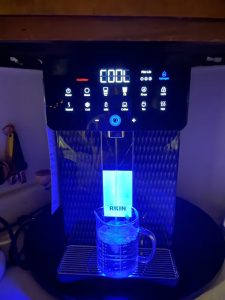
Filter changes are designed to be quick. The filters use a quarter-turn removal approach, so swaps feel contained and straightforward. You spend less time fussing with parts and more time actually using the system.
Efficiency is clear and easy to set expectations around. It uses a 1:1 water-to-waste design, meaning one gallon of input water yields about half a gallon of purified water, while the other half carries away what got filtered out. Maintenance timing is spelled out too: the 2-in-1 sediment and carbon filter typically runs 6–12 months, the alkaline post filter runs 6–12 months, the hydrogen module is set for 6–12 months, and the RO membrane typically runs 12–24 months in normal use—so the routine stays predictable.
Pros
Cons
If you want RO water without installing anything—and you like the familiar rhythm of filling and pouring—this system fits beautifully. It’s one of the easier-to-live-with choices in many reverse osmosis water filter reviews because the routine stays simple and familiar. You fill a 2.5-liter tank, it filters into a 0.5-gallon borosilicate glass carafe, and you pour like you would from a high-quality pitcher. That glass carafe is dishwasher safe, so cleanup stays easy.
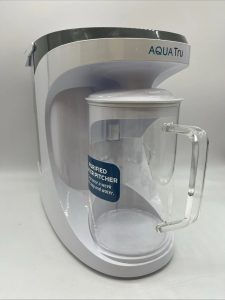
The removable clean-water tank adds a nice real-life perk. You can put it in the fridge and keep cold water ready without juggling ice trays or waiting for chill time. For a lot of people, that simple step turns “filtered water” into something you actually use every day.
Filtration happens in four steps, each with a clear job. A prefilter handles sediment, and a carbon prefilter addresses chlorine taste and odor, so the RO membrane doesn’t have to fight through those first. Then the RO membrane does the deep filtration, and a VOC carbon filter polishes the finished water so the final sip feels clean and consistent.
Certification matters when you want something more than vibes. This system is certified by IAPMO to NSF/ANSI standards for the reduction of 82 contaminants, which gives you a concrete trust signal behind your daily drinking water. [2] In practice, that helps you feel more settled about using it for everything from water bottles to cooking.
Batch speed is another everyday win. In normal use, it typically filters about a half gallon in around 10 to 15 minutes, so you can start a cycle while you prep dinner and come back to a full carafe. That pace fits into a kitchen routine without turning into a chore.
Maintenance is laid out in clear intervals, which makes ownership easier to plan. The pre-carbon filter is set for about every 6 months, the VOC filter runs about a year or 600 gallons, and the RO filter goes about 2 years or 1,200 gallons. A digital display gives change-filter alerts, so you’re not doing mental math every time you refill.
Pros
Cons

This is a strong fit if you want countertop RO with zero plumbing and a more “appliance-like” experience. If you’re trying to pick from the best ro system contenders that avoid installation entirely, this is the kind of approach that keeps things simple. You plug it in, fill a removable 152-ounce tank, and it produces purified water automatically. Instead of improvising with a pitcher and a stopwatch, you get a system that guides the process.
Dispensing feels controlled and practical. You choose 4 ounces, 8 ounces, 17 ounces, or continuous flow right from the screen, which makes it easy to fill a mug, a baby bottle, a shaker, or a big jug without overfilling. That kind of precision sounds small, but it makes the system feel calm to use every day.
The filtration core is true RO: it uses 0.0001-micron reverse osmosis filtration. In plain terms, the membrane acts like an ultra-fine barrier, so your water starts from a much cleaner baseline before it hits your glass. This system pairs carbon fiber with a 100-gallon RO membrane and an alkaline post filter, which supports a clean, finished taste that’s comfortable for daily drinking.
For confidence, it’s NSF/ANSI 58 certified. That’s a common performance standard associated with RO systems, and it helps you feel more settled that you’re working with real RO filtration. In practical terms, it supports the “drink it, cook with it, fill bottles with it” routine without second-guessing.
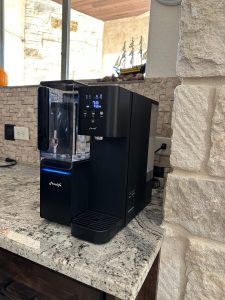
The screen does more than just dispense. You get a real-time TDS reading after each water production, so you can check your water with a quick glance. The system tracks filter life and gives reminders ahead of time, so you stay consistent without surprise performance dips.
It even addresses the “life happens” reality of countertop water. If the water has been sitting in the pitcher for over 24 hours, it flags that, which nudges you toward fresher pours. Filter changes stay easy too: the RO membrane swaps with a twist, and the post filter uses a simple pull-and-push method, and in normal use the RO membrane typically runs about 12 months.
Pros
Cons
A good RO setup isn’t just about filtration—it’s about whether you’ll actually use it every day. This guide helps you choose the form factor, routine, and monitoring style that fits your kitchen and your habits.

Start with the simplest question: do you want installation, or do you want plug-and-play? Countertop systems let you get RO without touching plumbing, which feels ideal if you rent, move often, or simply want a quicker setup. The tradeoff is routine—you refill a tank or run batches, and you plan your water the way you plan coffee.
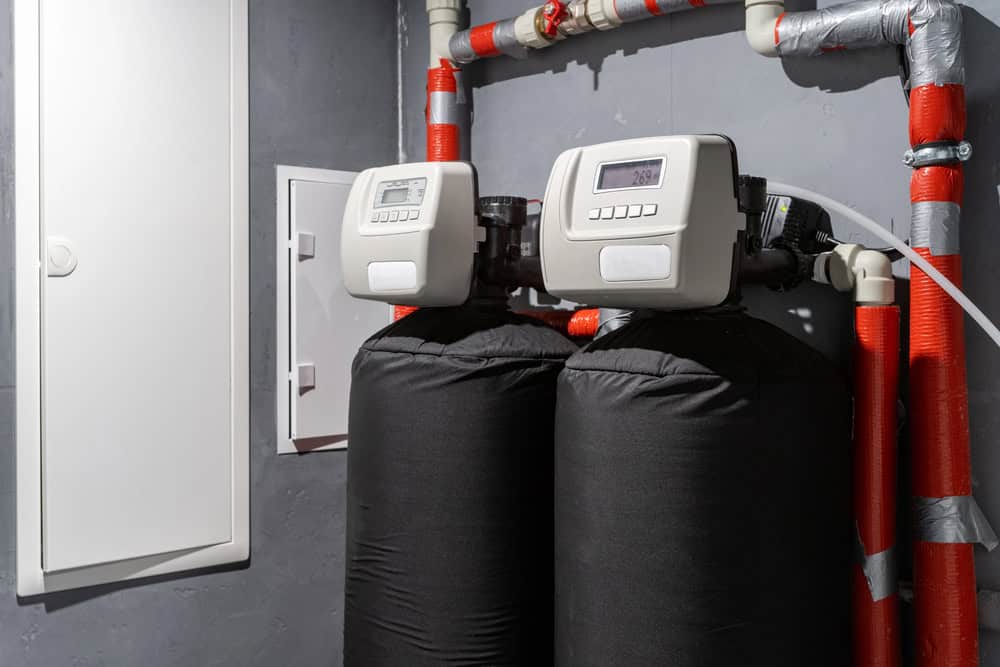
Under-sink systems shift the experience the other way. You install a dedicated faucet and keep purified water stored in a tank, so you pour on demand as part of normal kitchen life. If you have the under-sink space and you want “water whenever I want it,” this style typically feels more seamless. [3]
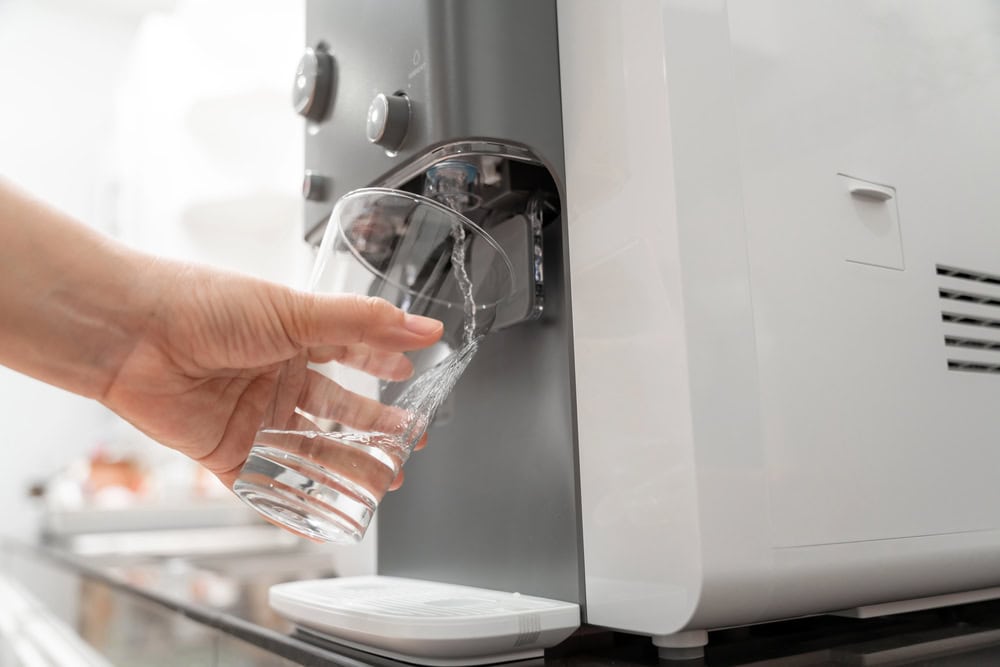
Not all countertop RO systems feel the same. A carafe-based unit fits a batch routine: fill the tank, let it run, then pour like a pitcher—great if you like keeping water in the fridge and serving it at the table. That style rewards consistency and makes refilling feel natural.
Other countertop systems behave more like an appliance with controls and preset pours. If you like quick bottle refills and measured dispensing for mugs, mixing, or cooking, an interface-driven dispenser often feels smoother. If you’re doing a reverse osmosis water filter comparison, this is one of the clearest day-to-day differences you’ll notice.
If you want instant hot water in the mix, a countertop station that does cold and hot on demand changes your daily rhythm even more—especially for coffee and tea. That kind of setup fits best when you want water to behave like a kitchen appliance, not a slow, occasional process.
Some people want “set it and forget it,” while others feel better seeing what’s happening. If you like the reassurance of numbers, systems that show TDS readings or track water quality remove a lot of uncertainty. You end up trusting the pour because you can check it, not because you hope it’s fine.
App tracking takes that one step further by putting filter life, water quality, and tank status in one place. That’s especially helpful in busy homes, where maintenance often gets pushed down the list. When your system nudges you at the right time, consistency becomes the default.

The best maintenance routine is the one you’ll actually follow. Clear filter-life reminders and straightforward changeouts keep your water consistent without turning the system into a project. Designs like quarter-turn removal or simple twist swaps make a big difference, because you’re not dreading the next replacement.
Pay attention to replacement timing expectations too. Some setups break maintenance into multiple components with different intervals, while others keep it more centralized. Neither is “better” universally—what matters is whether you prefer a simple, infrequent routine or a more structured schedule with multiple parts.
RO systems send some water down the drain as they flush away what they remove. What matters for you is having clear expectations so you don’t feel surprised by the routine. Some systems operate with a 1:1 waste ratio, while another approach uses a 3.5:1 pure-to-drain ratio—both are workable, but they make water use feel different in normal use.
If efficiency is high on your priority list, look for a setup that’s explicit about its ratio and pairs that with a routine that fits your household. When you align the system’s efficiency profile with how you refill and how often you use water, ownership feels simpler and more predictable.
Related Water Filter Guides:
If you want an under-sink RO setup with strong visibility and a modern ownership experience, Cloud RO fits best—especially if you like checking tank status and water quality and you want solid pressure support. If you prefer a traditional under-sink tank system with a staged filtration approach and an optional hydration-style finish, the US Water Systems All-Home Reverse Osmosis System is a strong match.
For countertop shoppers, your best pick depends on how you live. RKIN U1 suits you if you want a countertop station that supports hot and cold on demand and you like app-based monitoring. AquaTru Carafe works best if you want a batch routine with a glass carafe you can keep in the fridge. Frizzlife WB99-C is ideal if you want countertop RO with guided dispensing, real-time TDS feedback, and a straightforward filter-change routine.
If you’re still asking what is the best reverse osmosis system for your home, choose the system that matches your kitchen space and the way you actually drink water day to day. Then scroll back up to the product list and pick the one that fits your routine—because the “best” RO filter is the one you’ll use consistently.