This article may contain affiliate links. I may earn a small commission at no extra cost to you. Learn More

Menu

If your tap water makes your coffee taste “off,” or you catch a chlorine smell when you fill a glass, an under-sink system is one of the cleanest upgrades you can make to your kitchen—especially if you’re trying to land on the best under sink water filter system for your routine. You get filtered water right where you cook, drink, and refill bottles—without a big pitcher living on your counter.
The only real challenge is choosing the right style for your routine. Some systems keep your normal faucet experience and focus on straightforward filtration, while reverse osmosis (RO) setups add a separate drinking-water faucet and go after more of the dissolved stuff in the water. This guide helps you sort through the differences so you land on the setup that fits your space, your habits, and the kind of “better water” you’re actually chasing.
I compared the product details carefully to narrow this list down to options that stand out for performance, usability, and long-term ownership. You’ll see what each system is built around, how it fits under a sink, and what it feels like to live with day after day.
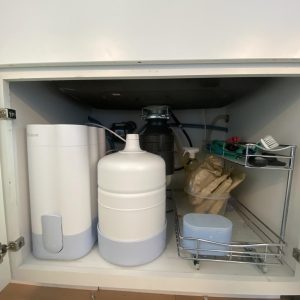
Cloud RO feels like the “smart appliance” approach to under-sink water, and it stands out among the best under sink water filters when you want clear visibility into what’s happening under your cabinet. It uses built-in sensors and connects to an app that shows system status, filter status, and water quality tracking. That means you spend less time guessing and more time simply filling a bottle and moving on with your day.
The monitoring goes a step further by tracking readings like inlet TDS and post-filtration results. In normal use, that visibility makes ownership feel calmer—especially if you like knowing what’s happening inside the system instead of relying on memory or a calendar reminder.
On the treatment side, Cloud RO is NSF 58 certified, and it shows a 98% TDS rejection rate in its testing. The filtration path includes a 5-micron sediment filter, a 1-micron carbon block, an RO membrane, and a remineralizing post filter. The practical takeaway is a deeper-cleaned drinking water stream with a finished taste profile that doesn’t feel “empty” after RO.
For everyday performance, the system lists an 80 GPD production spec, a 1:1 waste ratio, and a 2.8-gallon tank. It also uses a permeate pump that puts outlet pressure around 40–45 psi, and the faucet flow is listed at 0.625 GPM. So when you fill a glass, you get a steady pour that feels more like a usable kitchen tool than a slow trickle.
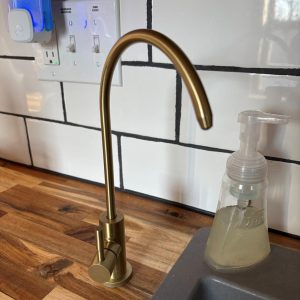
If you’re looking for specifics on reductions, this Cloud RO system provides a lot of clarity. It shows chlorine reduction over 99%, chloramine reduction over 99%, and turbidity reduction over 99%, which lines up with the common “pool smell” and cloudy-water frustrations people notice at the tap. It also shows lead reduction over 99% in multiple test conditions, PFOS and PFOA reduction over 98%, and arsenic reduction around 99.9%, so you end up with strong coverage on several headline contaminants.
The remineralizing stage adds minerals like calcium, magnesium, potassium, sodium, and zinc, and the pH typically lands in a 7.5–9.5 range depending on contact time, temperature, and post-filter life. Filter replacement depends on usage, and a typical cadence for a family of four is about 9–12 months, so upkeep usually feels like an occasional chore instead of a constant project. Installation is positioned as a 30-minute modular job, and the system is built around a 10-year lifespan, which suits you if you want a long-term, trackable upgrade.
Pros:
Cons:
This system is a great fit if you like having choices rather than being locked into one “standard” configuration, and it fits neatly in the best under the sink water filter system category for shoppers who want more control over the final result. You choose between a 5-stage drinking-water setup and a 6-stage route designed for alkaline water. That flexibility helps you match the system to what you want your water to feel like in the glass.
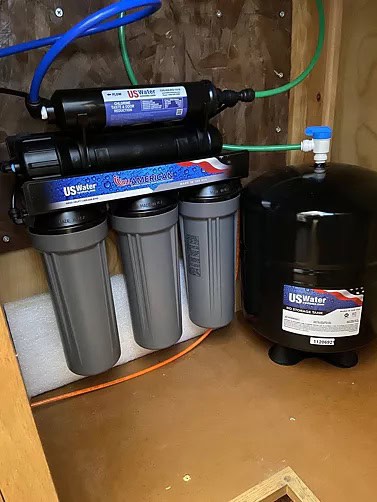
At the core, you’re working with a 100 GPD RO membrane and a storage tank. In real life, the tank matters because it keeps a ready reserve for things like cooking water, bottle refills, and back-to-back pours during busy mornings.
The early stages focus on protecting the RO process and improving the finished taste. It starts with a 5-micron sediment filter, then moves into carbon block filtration. After that, you get a 1-micron special blend carbon block positioned to target chloramine and PFAS before the water hits the membrane, so you’re feeding the RO stage cleaner water upfront. [1]
After the membrane, a post-carbon filter polishes the taste. The result is a drinking-water stream that feels cleaner and more neutral, especially in coffee and tea where “tap flavors” show up fast.
If you choose the 6-stage alkaline configuration, it adds a Livation Hydration Technology filter. That stage is built to raise pH into an 8.5–10 range and shift ORP into a –100 mV to –200 mV range, so you get a more alkaline-style finish when you pour a glass.
Ownership details are geared toward making installation and layout easier. You get color-coded tubing with four connections and a tube cutter, which keeps the hookup process from feeling like a guessing game. The faucet is described as a lead-free ceramic disc style and comes in multiple finishes, and the tank base supports upright or side placement—handy when your cabinet layout is tight. The system includes a 1:1 waste-to-production ratio on the membrane side and a 5-year warranty, which gives you a clear foundation for long-term planning.
Pros:
Cons:
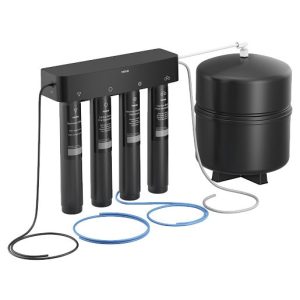
This is a classic under-sink RO setup that works well in the best under sink water filtration system lineup when you want a structured, familiar setup with a separate drinking-water faucet. The big day-to-day benefit is reliability: you reach for the dedicated faucet and you get a consistent stream of treated water for drinking and cooking.
The system uses an air gap setup for the drain connection, which is part of the typical RO installation style. If you want an RO system that feels structured and conventional, this approach usually matches that expectation well.
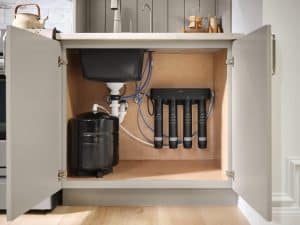
Moen’s certifications are a key part of its identity. It’s certified by IAPMO R&T to CSA B483.1 and NSF/ANSI standards 42, 53, 58, 372, and 401, plus NSF Protocol 231. For you, that translates into a higher-confidence purchase when you care about recognized evaluation standards.
Daily performance is framed clearly: it’s rated for a 27.5-gallon-per-day production rate and a 0.5-gallon-per-minute flow rate at the faucet. In normal kitchen use, that pairing supports steady refills for glasses, bottles, and meal prep without the experience feeling painfully slow.
Treatment follows a 4-stage path: sediment filtration, carbon filtration, an RO membrane, and a final carbon polish. The system is positioned to reduce contaminants including arsenic, fluoride, TDS, lead, mercury, chlorine, and pharmaceuticals, so you’re covering more than just taste and odor.
Maintenance is one of the easiest parts to plan with this system because it follows a clear cadence. Filters 1 and 2 follow a 6-month cycle, and filters 3 and 4 follow a 12-month cycle. The cartridges release with a 90-degree turn and a gentle pull-down motion, so swaps feel controlled and straightforward. There’s also a long view here: the system is meant to be replaced every 10 years from the installation date, which helps you think in terms of a decade-long upgrade rather than a short-term gadget.
Pros:
Cons:
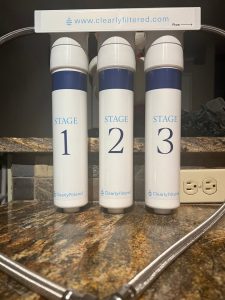
If you want filtered water without changing your sink habits, this is one of the best water filter for sink picks because it keeps everything flowing through the faucet you already use. It delivers filtration through your normal kitchen faucet, so filtered water becomes your default for drinking, cooking, rinsing produce, and filling a pot—no separate faucet to think about.
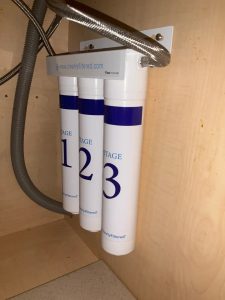
Because it’s not an RO setup, you skip the drain-line style installation and you don’t need power. That keeps the under-sink footprint and the overall experience more “straightforward filter” than “mini water appliance.”
The filtration is a 3-stage design, and it’s independently lab tested to comply with NSF/ANSI standards 42, 53, 401, and 473. That coverage ties into both everyday annoyances and broader contaminant concerns, which helps if you want a system with a wide evaluation framework behind it. [2]
This system is positioned to remove up to 99.99% of 232+ contaminants, including fluoride, lead, PFAS, and microplastics. The practical payoff is peace of mind for drinking and cooking water, especially when you’re using filtered water for things that concentrate flavor—like tea, soup, and ice.
Installation is designed to feel approachable. It mounts under your sink and connects to the cold-water supply line using standard 3/8-inch lines. The process is framed as a quick job with an adjustable wrench, so it reads as a manageable DIY project instead of a major plumbing event.
Maintenance stays simple and predictable. The filters last one year on average, and replacements are framed as a fast swap. The system uses BPS- and BPA-free materials, which is a nice comfort detail for a product that sits in your drinking-water path all year.
Pros:
Cons:
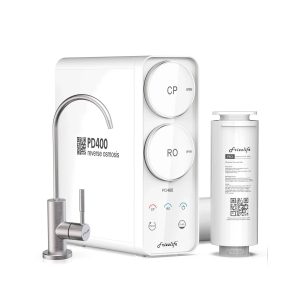
Frizzlife PD400 is built for you if you want RO-level treatment without giving up a big chunk of cabinet space, which is exactly why it’s a strong fit in the best under cabinet water filter category for tighter under-sink layouts. It uses a tankless under-sink design, so you keep more room for your trash can, cleaning supplies, and all the things that end up living under the sink.
This system runs to a dedicated lead-free faucet, which makes the routine simple: one faucet for regular water, one faucet for RO water. It also includes an internal pump, and it lists a 400-gallon-per-day rating, which supports a faster, more usable feel when you’re filling bottles or cooking water.
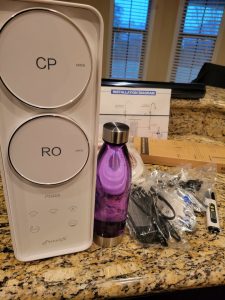
Treatment centers on a 0.0001-micron RO membrane and a 5-stage process. That setup focuses on deeper cleaning at the dissolved level, not just masking taste. It’s positioned to go after contaminants like lead, chlorine, fluoride, chloramine, VOCs, and TDS, so you’re getting broad coverage for drinking and cooking water.
A TDS meter comes with the system, which is a practical bonus if you like quick feedback. Instead of guessing whether it’s “time” or “working,” you get a simple number you can track as part of your routine.
Water efficiency is another standout point here. The system lists a 1.5:1 pure-to-drain ratio, so you waste less water while making RO water compared to more waste-heavy designs. It also lists an operating range of 20–80 psi and 39–100°F, which supports normal kitchen conditions without feeling overly delicate.
Maintenance is designed to stay low-friction. Filters use a twist-in cartridge design, and a built-in filter life indicator beeps when it’s time to change them. The schedule is easy to remember: one cartridge on a 12-month cycle and the other on a 2-year cycle. There’s also an integrated water cycle board meant to help guard against leaks, which is exactly what you want for something living under a sink full of towels and paper goods.
Pros:
Cons:
A good under-sink system should fit your space, match your routine, and address what you actually dislike about your tap water. This buyer’s guide walks you through the most important decision points so you don’t overbuy, underbuy, or end up with a setup that feels annoying to use.

When you’re choosing between the best under sink water filtration styles, start with how you want filtered water to show up at the sink. The Clearly Filtered system keeps your regular faucet and focuses on multi-stage filtration without an RO drain-line style setup. That approach fits you when you want filtered water everywhere at the sink with the simplest day-to-day experience.
RO systems—like Cloud RO, Moen, the US Water Systems model, and Frizzlife—use a dedicated drinking-water faucet and an RO membrane stage. That design is built for deeper treatment, and it tends to shine when you care about dissolved solids and broader contaminant reduction coverage. [3]
In practice, the choice usually comes down to how you want filtered water to show up in your kitchen. If you want filtered water to be the default stream for cooking and rinsing, a faucet-fed filter feels natural. If you want a dedicated “drinking water” station that goes deeper, RO fits that path.
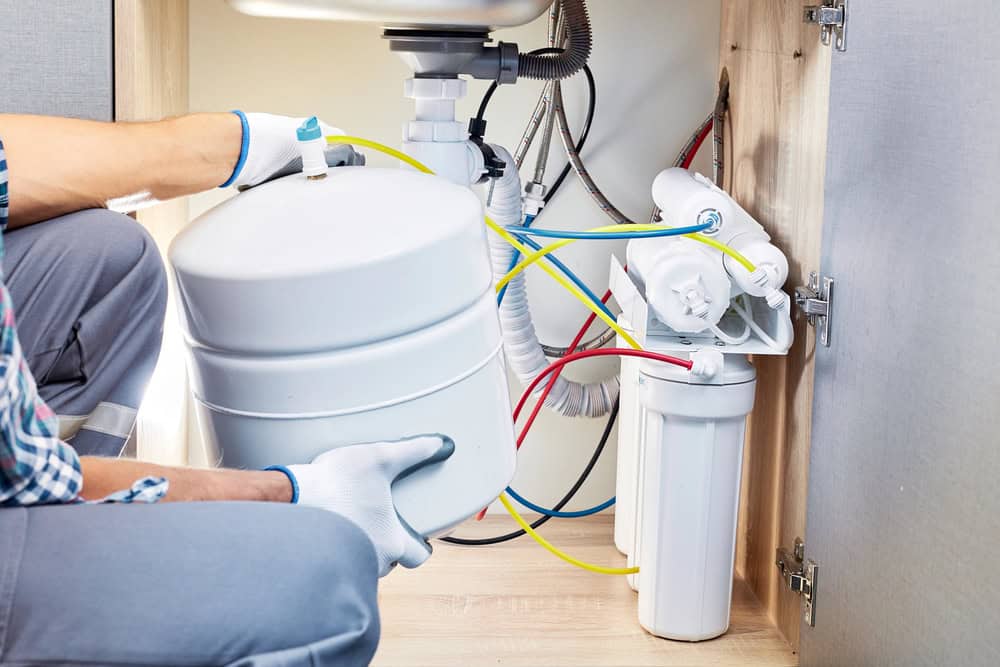
If you’re comparing the best under counter water filter setups, decide early whether under-sink space is your limiting factor. Frizzlife PD400 uses a tankless layout, which preserves cabinet room and keeps the system feeling compact. That’s a big win when your cabinet is already crowded.
Tank-based RO designs—like Cloud RO, Moen, and the US Water Systems model—store treated water in a tank. That reserve supports repeated pours for cooking and bottle refills, especially when you’re moving fast in the kitchen and want water ready on demand.
Your cabinet layout should drive this decision. If space is the limiting factor, tankless RO looks very appealing. If you like the idea of a stored reserve for busy days, a tank-based approach feels more familiar and steady.

If you’ve been scrolling under sink water filter reviews, pay close attention to how ownership gets handled week to week. Maintenance is where “great on paper” turns into “easy to live with.” Cloud RO leans into visibility with app monitoring that shows filter status and water quality tracking.
Frizzlife focuses on a simple routine with a built-in beeping filter life indicator and a split schedule—one cartridge on a 12-month cycle and the other on a 2-year cycle. Moen is very calendar-friendly too, using a 6-month cycle for two filters and a 12-month cycle for the other two.
If you prefer an ownership experience that feels guided, look for clear replacement cadences and easy swap mechanics. When maintenance feels predictable, you’re far more likely to stay on schedule and keep your water quality consistent.
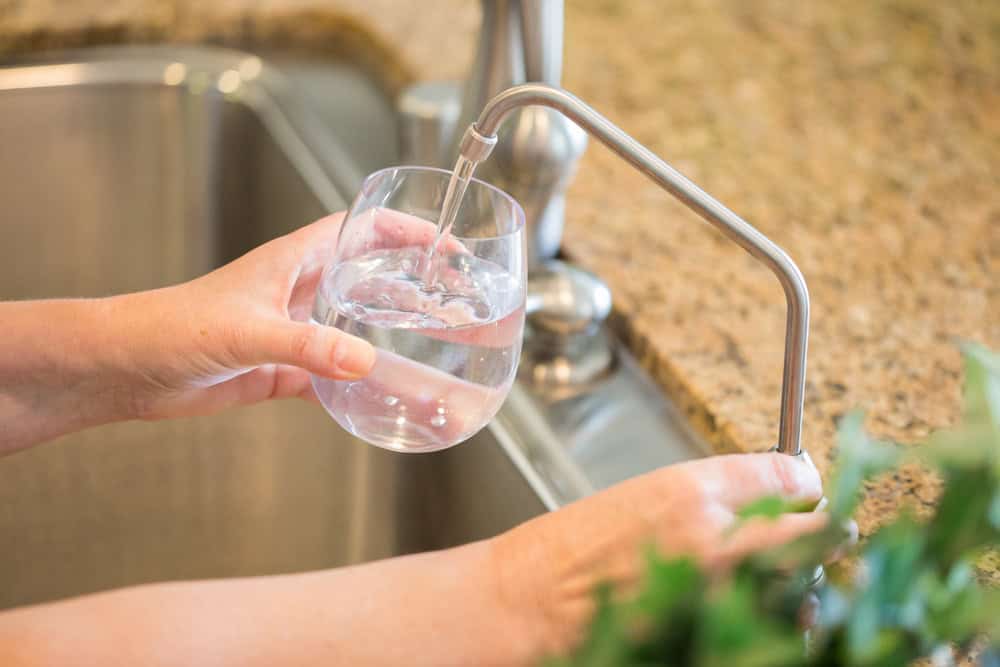
Not every kitchen uses filtered water the same way. If you mostly fill a glass and make coffee, almost any under-sink system will feel like an upgrade. If you refill big bottles, fill pots for cooking, or want the filtered faucet to feel “normal,” flow and daily output become more important.
Some systems clearly emphasize speed and throughput. Frizzlife PD400 lists a 400-gallon-per-day rating and uses an internal pump, which supports faster fills in day-to-day use. Cloud RO lists an 80 GPD production spec, a pump that drives outlet pressure around 40–45 psi, and a 0.625 GPM faucet flow rate, which helps the pour feel steady.
Your best move is to picture your busiest kitchen moment—morning bottles, dinner cooking, guests refilling cups—and choose a system that matches that pace. When your system keeps up, you stop thinking about it, which is exactly the point.
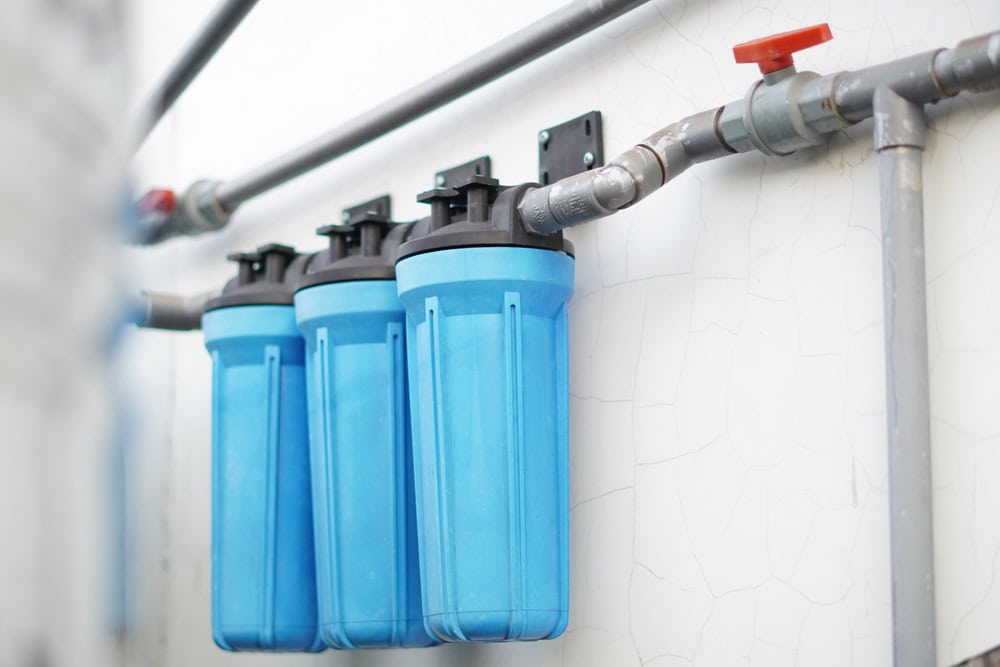
With RO systems, the waste ratio shapes how efficient the setup feels. Cloud RO lists a 1:1 waste ratio, and the US Water Systems model lists a 1:1 waste-to-production ratio on the membrane side. Frizzlife lists a 1.5:1 pure-to-drain ratio, which is designed to reduce drain waste compared to less efficient approaches.
In practical terms, better efficiency means you feel less “drain guilt” when you’re filling bottles, making coffee, or topping off a pot for cooking. If you use filtered water often, that efficiency becomes part of the ownership experience rather than a technical detail.
Efficiency won’t replace good filtration, but it’s a valuable tie-breaker when you’re choosing between RO systems that otherwise seem similar. A system that’s designed to waste less water tends to feel better to live with over time.
Related Guide: Best under sink water filter for well water
If you want the most information-rich ownership experience, Cloud RO stands out for app monitoring and clearly stated performance details, including NSF 58 certification and strong listed reductions for several major contaminants. It’s a great fit when you like seeing system status and tracking water quality instead of guessing.
If customization matters most, the US Water Systems reverse osmosis model fits you well because you choose a 5-stage drinking-water setup or a 6-stage alkaline-focused route with stated pH and ORP targets. It’s the right pick when you want to steer the final “feel” of your drinking water.
If you prefer a structured, certification-forward RO system with an easy maintenance calendar, Moen delivers a very clear replacement rhythm and a classic tank-based approach. It suits you when you want an RO setup that feels familiar and planned out.
If you want filtered water through your regular faucet and a simpler under-sink experience, the Clearly Filtered 3-stage system is the cleanest match. It’s ideal when you want filtered water to be the default for cooking and drinking without adding a separate RO faucet.
And if your cabinet space is the deal-breaker, Frizzlife PD400 brings a tankless RO design with a clear filter-change routine and an efficiency-focused waste ratio. It’s a strong fit when you want RO treatment without sacrificing your under-sink storage.
At this point, the best move is to pick the system that matches how you actually use your kitchen. Scroll back up to the product list, choose the style you’ll enjoy living with, and you’ll end up with the best under sink water filter system for your routine.