This article may contain affiliate links. I may earn a small commission at no extra cost to you. Learn More

Menu

Hard city water has a way of showing up everywhere, and finding the best water softener for city water starts with paying attention to what you’re seeing at home: cloudy glassware, stubborn spots on faucets, crusty scale in the kettle, and soap that feels like it never quite “wins.” Even when your water comes from a treated municipal supply, hardness minerals still travel through your plumbing and leave their mark on showers, laundry, and dishes.
This guide helps you pick a system that fits how you actually live—how many bathrooms you run, how much flow you need at peak times, how hands-off you want regeneration to feel, and whether you’d rather check everything from a phone or a simple display on the unit.
To build this best water softener system guide, I compared the product information closely to identify the best water softeners for city water and keep the focus on real-life outcomes—steadier soft water, easier cleaning, and a routine that feels manageable once it’s installed.
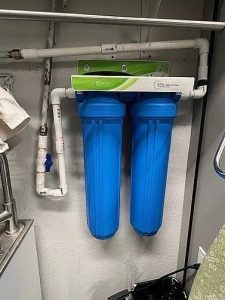
If you’re trying to fit a scale-control system into a tighter utility area, the E-2000 stays compact. The listed dimensions are 29" x 15½" x 8", it mounts without taking floor space, and the product page notes indoor or outdoor installation with weather in mind. That gives you a cleaner install path than a bulky tank setup in many homes.
Flow and home-size fit are straightforward here too. Kind Water rates the E-2000 up to 15 GPM for homes up to five full bathrooms, and it adds a max hardness rating of 1282 PPM (75 GPG), which is a useful spec if you’re comparing systems for tougher water. You also get a standard 1" NPT connection, so it drops into typical residential plumbing more easily.
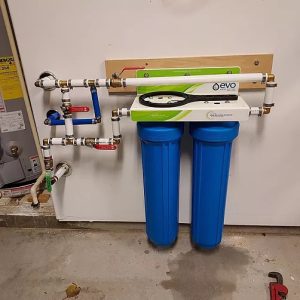
The system’s trust signals are more about construction and safety than contaminant certification claims. Kind Water lists NSF/ANSI 61 and 372 certifications for drinking-water safety and lead-free components, along with operating ranges of 25–120 psi, 39–113°F, and pH 6.5–9.5. That gives you a clear checklist to match against your home’s plumbing conditions before you buy.
Ownership stays light after installation. The page describes DIY-friendly setup options, quick twist-off filter changes done in minutes, and no need for a technician for normal replacement work, and it also notes the system can be paired with RO, UV, or specialty filtration if you want to build out treatment later. If your priority is scale control with less upkeep, this is the Kind Water model that stays closest to that goal.
Pros
Cons
If your biggest goal is matching a softener to the way your home is laid out, this lineup makes that decision feel straightforward. It’s a practical starting point if you’re narrowing down the best water softener system for city water shortlist for your home’s layout. That approach matters because undersizing usually shows up at the worst time—when showers and appliances overlap.
The service flow rates scale with the models: 11 GPM for 1–3 bathrooms, 13 GPM for 4–6 bathrooms, and 20 GPM for 7+ bathrooms. That translates into a more normal, steady feel at the tap when your household gets busy. You keep the shower comfortable while someone rinses dishes or a sink runs in another room.
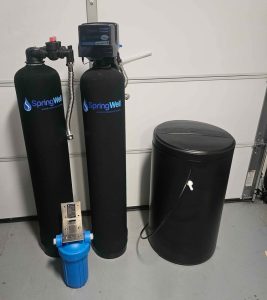
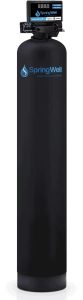
On the treatment side, you’re working with ion exchange in a resin tank, paired with an electronic metered valve that tracks water use by the gallon. That setup ties regeneration to real household demand instead of forcing a one-size schedule. [1] In day-to-day use, you get soft water that stays consistent as your routine changes from weekdays to weekends.
When the resin bed needs cleaning, the system runs a series of back flushes that push trapped minerals out to drain. The practical payoff is simple: you spend less time fighting scale buildup that usually clings to fixtures, showerheads, and appliances. Over time, your cleaning rhythm feels more like quick wipe-downs instead of deep scrubs.
Monitoring and control feel modern here. You can view settings and status, adjust settings, review current and historical water usage, and even start regeneration or a backwash cycle from a phone or tablet. That means the system doesn’t feel like a “mystery box” in the utility area—you can check what’s going on without hovering over the control head.
Model sizing stays clean across the lineup: SS1 is 32K grains, SS4 is 48K grains, and SS+ is 80K grains, all with a 1" connection size. It runs within an operating pressure range of 25–80 PSI and an operating temperature range of 36–120°F, which fits typical indoor conditions. If you want a softener that’s easy to size and easy to keep an eye on, this one keeps the whole experience approachable.
Pros
Cons
This option is a strong fit if you’re trying to choose the best city water softener for a steady routine without feeling wasteful in the background. It targets the calcium and magnesium that create classic hard-water headaches, so soap and detergent behave more normally again. In everyday use, that shows up in faster lather, easier rinse-off, and less “film” left behind on skin and surfaces.
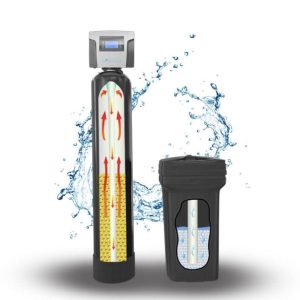
A key part of the design is upflow regeneration. Instead of pushing water the same direction as normal service flow, the cleaning cycle drives hardness minerals up through depleted resin and out to drain. The practical upside is efficiency: you conserve salt and preserve unused resin so the system focuses its effort where it counts.
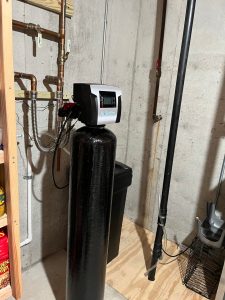
You’re not locked into a rigid setup either. The control valve is programmable, so the system can be configured to suit how your household uses water. That translates into a softening routine that feels more aligned with your real usage instead of forcing you to adapt to the system.
Where this really shines is in the “backup plan” for heavy-use moments. If capacity drops below 3%, a short 15-minute recharge restores additional capacity to keep softening until the regular 2:00 a.m. regeneration time. That means you’re less likely to get caught off guard by a sudden return of hard water right when you’re showering or running laundry.
Regeneration cadence is built to be reasonable in normal use. It generally averages about every 14 days, depending on your water quality and how much your household uses. The result is a routine that typically feels calm—more like occasional upkeep than constant attention.
Capacity rounds out the value here, with up to a 64,000-grain capacity available. With this SoftPro model, you get more breathing room for heavier demand without feeling like you’re right at the limit all the time. It’s backed by a lifetime limited warranty and a 6-month satisfaction guarantee, which makes it easier to commit to a whole-home system with confidence.
Pros
Cons
If you like visibility and control, this is one of the best city water softener systems contenders for staying on top of things day to day. The valve connects by Bluetooth and works with the Legacy View app, so you can adjust settings, monitor performance, and check salt level from your phone. That means fewer “utility room check-ins” and more quick updates while you’re already doing something else.

The reporting is a standout for data-minded homeowners. You get 90-day water usage reports, along with peak flow and average daily usage. In practice, that makes it easier to understand your household patterns—like when demand spikes—and keep your system set up to match how you actually use water.
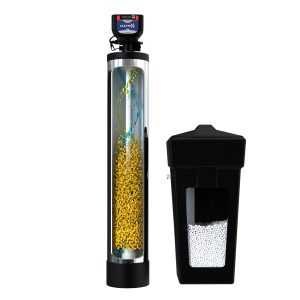
It’s built with city-water realities in mind. [2] The system uses NSF Certified 10% cross-linked resin, chosen for durability and resistance to chlorine and iron degradation. That translates to resin media that holds up better in disinfected water conditions, so the softening core stays focused on consistent performance.
Flow support is another strong point. With 1" internal porting and a listed 27 GPM peak flow rate, you’re set up for busy household moments where multiple fixtures run at once. The StackFlow high-efficiency internals use oversized upper and lower baskets designed to keep pressure and flow feeling steady, so your water doesn’t suddenly feel constrained when the home is active.
Maintenance stays practical too. The brine tank holds up to 220 pounds of salt and includes an internal float and safety overflow, so salt refills feel less frequent and the brine setup stays controlled. The valve design keeps things simple with only one internal moving part, which supports a cleaner mechanical layout.
Power handling adds another layer of confidence. It runs on low voltage and includes battery backup, so your system stays protected during outages. If you want a softener that combines high-flow support with modern monitoring, this one delivers a very “in-control” ownership experience.
Pros
Cons
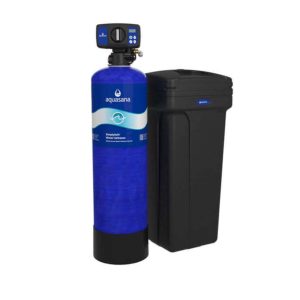
If you’ve been scrolling city soft water softener reviews, this is a great choice when you want a clean, whole-home softening setup that keeps ownership feeling organized. It uses ion exchange to reduce hardness minerals, so you notice fewer spots on dishes, less scale clinging to shower surfaces, and a more satisfying soap-and-shampoo routine. [3] The day-to-day payoff is water that behaves more predictably throughout the home.

Sizing is clearly framed for household needs. It’s positioned for homes with up to 5 people and 4 bathrooms, paired with a 40,000-grain capacity. That means it’s meant to keep soft water available through typical family routines, not just during light use.
The control experience is a big quality-of-life win. The customizable LCD panel shows time, regeneration modes, and gallons remaining. That translates into fewer guess-and-check moments, because you can quickly see where the system stands without turning management into a chore.
Flow and operating limits are spelled out in a way that helps you plan your home’s demand. The rated flow is 11.02 GPM with a 15.5 GPM peak flow rate, and it supports up to 125 psi max operating pressure with a 40–100°F operating temperature range. In practice, that supports normal whole-home use while keeping the system within common indoor conditions.
One of the most practical inclusions is the pre-filter. It blocks rust, sediment, and silt from entering your supply and clogging the softener unit, which matters when city line work stirs up grit. That translates to a cleaner system internally and a smoother ownership experience, especially when your water occasionally carries debris.
Maintenance is straightforward and customizable. The standard 20" pre-filter replacement routine is every 2 months, and there’s a low-maintenance pre-filter option listed at every 6 months. You get to pick the rhythm that fits your household, so the system stays consistent without feeling high-maintenance.
Pros
Cons
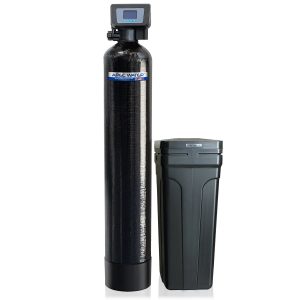
This system makes sense when you want a capable whole-home softener that keeps up with a busy household and doesn’t demand constant attention. It’s a strong fit for people shopping the best water softener for city water picks with tougher hardness in mind. It’s rated for max hardness up to 45,000 grains, so it’s built for tougher city-water hardness levels that quickly create scale. That translates into less crust in kettles and fewer stubborn mineral marks around faucets and shower hardware. [4]
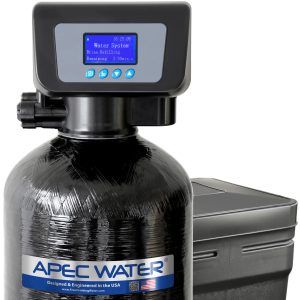
The metered control style does a lot of the “thinking” for you. It monitors water use and adjusts to changing demand, so regeneration follows how your household actually uses water. In normal use, that means fewer unnecessary regeneration cycles and a routine that feels more efficient with both water and salt.
Flow support is strong for everyday life. With a listed 17.6 GPM peak flow rate, you can run multiple fixtures without the system feeling like it’s holding your home back. It supports feed water pressure from 20 to 125 psi and feed water temperature from 34 to 110°F, which fits typical indoor plumbing conditions in many homes.
The interface keeps ownership simple. You’re working with a solid-state microprocessor, an LED display, and a fully automatic, pre-programmed electronic control valve. That means checking or confirming settings feels quick and practical instead of complicated.
Salt handling is designed to reduce how often you restock. The salt storage tank holds 200 pounds of salt, so refills don’t feel constant. For installation, you plan for an indoor setup with a drain line so regeneration has a place to send rinse water, and then the system settles into a predictable, hands-off routine.
Pros
Cons
The goal of this buyer’s guide is to help you sort through the best water softeners for city water paths based on real-life needs—how your home uses water, how you want to manage the system, and what kind of routine you’re comfortable maintaining.

Start by thinking about what happens during your busiest hour. When you’re comparing the best water softener system for city water setups, that busiest-hour test keeps you honest. If showers, dishwashing, and laundry overlap, you’ll feel the difference between a system that keeps flow steady and one that starts to feel restricted.
Sizing is easiest when you tie it to something concrete—like bathroom count and household demand. Systems that offer multiple models with clear flow and capacity tiers make it simpler to pick the right fit. The more accurately you size, the more consistent your soft water feels throughout the week.
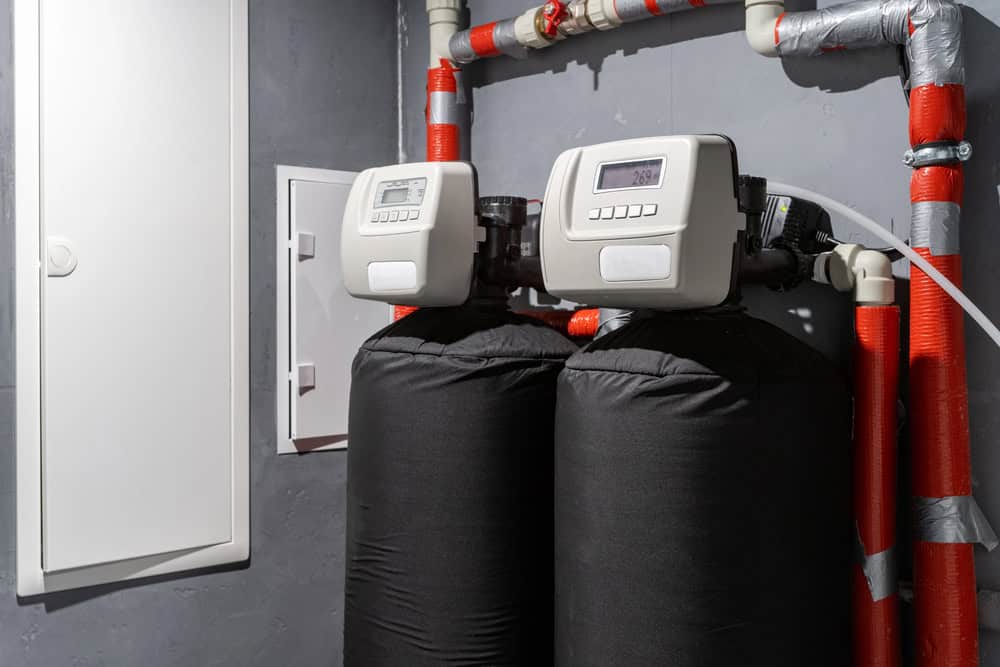
A metered approach lines regeneration up with actual water use. That usually feels more natural than a fixed schedule because it responds to weekends, guests, and seasonal changes in water use. In normal use, demand-based regeneration keeps routine from feeling wasteful.
Some systems add “coverage” features that protect you from surprise hard-water moments. For example, a short recharge cycle when capacity gets low helps keep soft water available until the main overnight regeneration. If your household demand swings a lot, that kind of safety net makes daily life feel smoother.

Monitoring matters because it shapes how “hands-on” the system feels. If you like checking things quickly from your phone, app-based control gives you a simple way to confirm status, view usage patterns, and make adjustments without standing next to the unit. That kind of visibility makes ownership feel calmer, especially in the first few weeks after installation.
If you prefer to keep it simple, an on-unit display still does the job when it shows clear, useful information—like regeneration mode or gallons remaining. The best choice is the one that matches how you naturally manage home systems, whether that’s phone-first or utility-room check-ins.

Softening is a long-term comfort upgrade, but it still comes with a routine. Salt storage size affects how often you haul bags and refill the tank, so larger capacity tanks usually make ownership feel less frequent and less interruptive. If you want to “set it and forget it,” prioritize a bigger salt storage setup.
Pre-filtration is another routine consideration. A built-in pre-filter that blocks rust, sediment, and silt helps keep the softener cleaner internally, especially when city maintenance stirs up debris. [5] The tradeoff is remembering filter replacement intervals, so it helps to choose a cadence that fits your habits.
Finally, make sure the system fits the conditions in your home. Pressure and temperature ranges should line up with typical indoor plumbing, and connection sizing matters for whole-home flow. These basics keep installation smoother and help the system operate the way it’s meant to.
Also think about space and placement. Whole-home systems live where your main line enters, and some setups need room for a brine tank, a control head, or a pre-filter. When the physical setup fits comfortably, the system feels easier to own from day one.
If you’re still asking what is the best water softener for city water, the simplest move is to match the system to your home’s demand and how you like to monitor it. If you want the cleanest “pick-your-size” experience, SpringWell stands out because it scales models by bathroom count with clear service flow choices, and it adds app control for monitoring and manual cycle control. If you care most about visibility and strong peak flow support, the Matrixx Smart Metered system fits that lane with app monitoring, detailed usage reporting, and a listed 27 GPM peak flow rate.
For a household that wants efficiency and fewer surprise hard-water moments, the SoftPro Elite System is a strong fit thanks to upflow regeneration and the quick 15-minute recharge when capacity drops below 3%. If you want a tidy whole-home upgrade with a built-in pre-filter and a clear LCD that shows gallons remaining, Aquasana SimplySoft keeps the routine easy to follow. And if you’re dealing with tougher hardness and want a system rated for max hardness up to 45,000 grains, the APEC Hydro Express Water Softener 45 brings a strong mix of capacity, metered control, and a large salt tank.
Your best choice comes down to your home’s demand, your preferred monitoring style, and the routine you’ll actually keep up with. Scroll back to the product list, match the systems to your household and habits, and you’ll end up with soft water that feels like a daily upgrade—not another thing to manage.