This article may contain affiliate links. I may earn a small commission at no extra cost to you. Learn More

Menu

Whole-house filtration sounds simple until you start shopping for the best whole house water filter system. You’re not just picking “a filter.” You’re choosing how your home treats every shower, every load of laundry, every pot of pasta water, and every glass you pour at the sink.
This roundup helps you sort the options by what actually changes in daily life: how steady the flow feels when multiple taps run, what maintenance looks like over a year, and which systems fit best when you care about things like chlorine taste, scale buildup, or fluoride.
To build this list, I compared key product details and focused on systems that offer clear, practical benefits for everyday use—without turning your utility room into a science project. Below, you’ll see what each option is built to do, what that means for your home, and what ownership feels like over time.
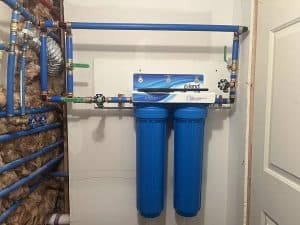
If you want a whole-house city-water filter that stays simple, the E-1000 keeps it to a two-stage setup. You get a sediment filter first and a carbon block filter second, so the system handles visible particles up front and then goes after chlorine and chemical contaminants. That means the water at your shower, kitchen sink, and laundry taps feels more consistent across the whole house.
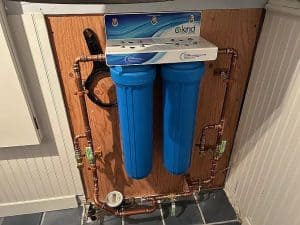
The first stage is a 5-micron pleated sediment filter, and Kind Water lists it at up to 95% particulate removal. It targets dirt, sand, rust, silt, and debris, so you’re not pushing that material deeper into your plumbing or into the carbon stage. In normal use, that first step helps the second filter work more efficiently for longer.
The carbon block stage is where this system leans into city-water cleanup. It targets 155+ contaminants and specifically calls out chlorine, chloramine, VOCs, pesticides, and herbicides, with NSF/ANSI 42 certification for chlorine, taste, and odor reduction. So when you fill a glass or jump in the shower, you notice cleaner-smelling water and less of that municipal-water taste.
Day-to-day ownership is pretty straightforward. The E-1000 is a compact wall-mounted format (29" x 15½" x 8"), uses 1" FNPT connections, and the page says filter changes are a quick twist-off, swap, and twist-back job with a typical 6–12 month cadence depending on water quality. The result is a whole-house filter that fits homes up to five full bathrooms without turning maintenance into a project.
Pros
Cons
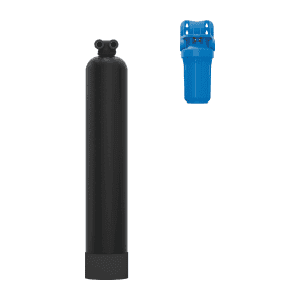
If you want a whole-home setup that’s straightforward to size and designed for long service life, and you’re comparing the best whole house water filtration system contenders, SpringWell sits comfortably at the front of the pack. It’s a 4-stage whole-house system built around KDF media, catalytic carbon, and a dedicated sediment stage, so you get one cohesive treatment chain instead of piecing together separate add-ons.
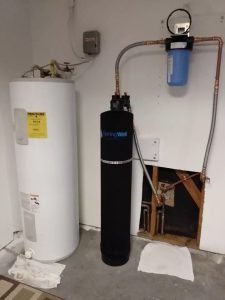
The core filtration stack stays practical. KDF media uses a copper/zinc alloy, which supports chlorine reduction so your water comes through less harsh when you drink it, brush your teeth, or rinse produce. [1] Catalytic carbon then takes on chlorine and chloramine while targeting organic contaminants like VOCs, pesticides, and herbicides, so your kitchen water tastes more neutral and shower steam smells less chemical.
Sediment gets its own lane with a 5-micron stage. That means sand, silt, and fine grit are handled before they travel through fixtures and appliances, so you notice fewer “dirty water” moments when you run a bath or fill a clear glass.
SpringWell’s sizing approach is tied to how many bathrooms you have, which keeps the decision grounded in real household demand. The 1–3 bathroom version runs at a 9 GPM service flow, the 4–6 bathroom version moves up to 12 GPM, and the 7+ bathroom version reaches 20 GPM. In day-to-day use, that sizing helps your showers stay consistent even when someone starts dishes or laundry.
The system is built to work within typical household plumbing conditions. It’s set for 25–80 PSI operating pressure and 36–120°F operating temperatures, so you’re working in a range that fits normal residential lines and water heater output.
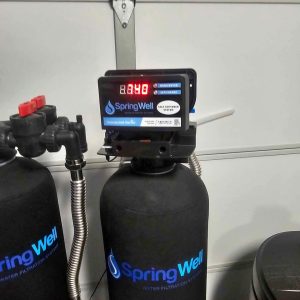
Ownership stays predictable because the maintenance milestones are spaced out and clearly defined. The pre-filter change/replacement interval lands at every 6–9 months, and the main media change/replacement interval is set at every 10 years or 1 million gallons. SpringWell also includes key install-related items—like the sediment filter housing, a spanner wrench, an O-ring, a hose bib assembly, a 1-inch MNPT fitting, and a mounting bracket—so the setup feels more complete on day one.
If you want to layer in disinfection, there’s a UV add-on option rated at 15 GPM with a 30 mJ/cm² dose. The result is a whole-house line that’s easy to scale up when your priorities call for it.
Pros
Cons
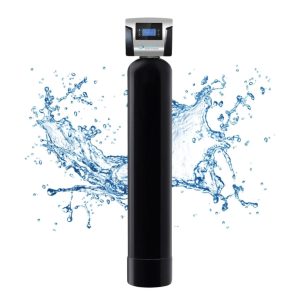
If fluoride sits high on your priority list and you’re narrowing down the best whole home water filter shortlist, SoftPro’s approach is built around that goal while still addressing the “everyday” issues people notice first—like disinfectant taste and shower odor. This is an upflow whole-house system that uses catalytic carbon and bone char carbon in the same treatment path, so you’re not relying on basic carbon alone for fluoride-focused filtration.
The upflow design pushes water upward through the media. That matters because longer contact time helps the media do its job consistently across the whole house, so you’re not just improving the water at one faucet—you’re treating what flows through your kitchen, bathrooms, and laundry lines.
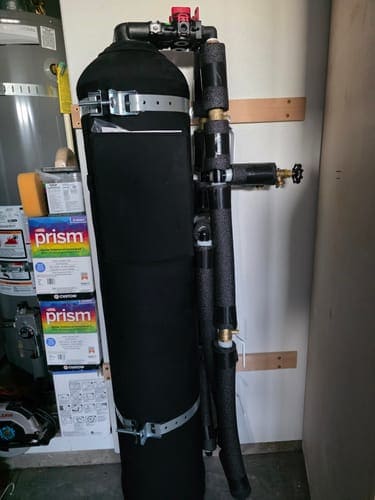
Bone char carbon plays the fluoride-specific role here, while catalytic carbon handles chlorine and chloramines more aggressively than standard carbon. [2] In normal use, that translates to water that tastes cleaner at the sink and produces less chemical-smelling steam when you shower.
SoftPro positions this system to reduce modern contaminants like PFAS along with a wider mix of impurities. The practical benefit is a more “covered” feeling across the home, especially if you want one system doing the heavy lifting.
Ownership is intentionally low-intervention. The system runs without chemicals and without electricity, so your day-to-day experience is simply using your water—no powered control box required for basic operation.
There’s also an automatic backwash override built for clean city water supply, skipping up to 10 backwash cycles. In practice, that helps avoid unnecessary flushing when your incoming water doesn’t demand it, so the system stays focused on filtration rather than extra routine.
SoftPro’s media longevity is framed as a long-term play: extended media life is tested for hundreds of thousands of gallons and positioned for 600,000 to 1,000,000 gallons, with typical lifespan guidance of up to 6–10 years under typical conditions. It even includes a neoprene tank jacket, which helps protect the tank and reduce condensation so the install area stays neater over time.
Pros
Cons
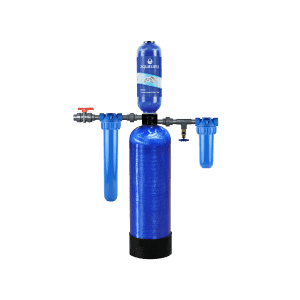
Aquasana Rhino Max Flow is the option you look at when flow rate and long replacement intervals are the headline priorities, especially if you’re deciding between the best whole home water filtration system front-runners. It’s rated for 1,000,000 gallons or up to 10 years, so you’re not planning your year around frequent core media changes.
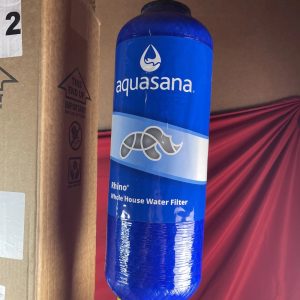
Where this system really leans in is water delivery under real household demand. Peak flow reaches 14.5 GPM with a rated flow of 14.0 GPM, which matters when multiple showers, appliances, and faucets run close together. In day-to-day use, your water feels less “choked” during busy mornings.
The system uses an upflow, dual-tank design to increase contact time. That means water spends longer moving through the treatment media rather than rushing through in a single pass, so treatment stays more consistent while you keep the higher flow profile.
For chlorine, it’s independently tested to NSF/ANSI Standard 42 to reduce up to 97% of chlorine at 14 GPM. The practical payoff shows up immediately: less pool-like odor at taps and a more pleasant baseline taste for drinking and cooking.
Aquasana highlights a broad treatment scope beyond chlorine, listing 78 total contaminants, including categories like chloramines, THMs, microplastics, cysts, lead and mercury, and PFOA & PFOS. That translates to a whole-home approach that aims to cover more than just “taste,” which is helpful if you want one system doing the heavy lifting across the house.
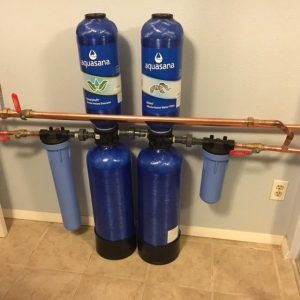
Confidence signals are built into the materials story as well. The Rhino tank is WQA certified to NSF/ANSI/CAN Standard 61 for material safety, and it uses copper-zinc KDF media that’s bacteriostatic, helping prohibit bacteria and algae growth while extending media life. In practical terms, you’re working with a system designed to stay steadier over time.
Maintenance stays structured because the system uses dedicated pre- and post-filters. The 20-inch pre-filter is set for replacement every 2 months, with a low-maintenance pre-filter option set for every 6 months, and the 10-inch post-filter replacement is set for every 6 months. If you want more coverage, you can add a salt-free water conditioner for scale control and a UV option for disinfection, so you can build out a more complete whole-home treatment chain.
Pros
Cons
Crystal Quest SMART is a strong fit when you want a whole-house platform that feels configurable, and you’ve been reading whole house water filter reviews while trying to avoid a one-size-fits-all choice. It comes in two capacity tracks—rated for 1,000,000 gallons or 1,500,000 gallons—so you can match the system to how long you want to run before you think about media replacement.
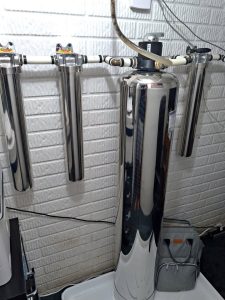
Flow is tied to the size you choose. The smaller option is rated around 9–11 GPM service flow, while the larger option lands around 10–13 GPM. That means you can aim for a steadier multi-tap experience by choosing the size that fits how your home uses water.
The filtration path starts with a 20-inch sediment cartridge, which catches grit and fine particles before they hit the main tank. In daily life, that helps keep your water looking clearer and supports smoother performance through fixtures and appliances.
Inside the multimedia tank, the system uses coconut shell granular activated carbon in both standard and catalytic forms, infused with Eagle Redox alloys and paired with ion exchange resin. That combination is built to tackle a broad set of water issues, so you’re not only chasing taste—you’re treating multiple categories at once.
Crystal Quest targets chlorine, chloramines, VOCs, THMs, pesticides, sulfur, heavy metals, hydrogen sulfide, and iron oxides. The practical benefit is a “cleaner-feeling” whole-home baseline—better for drinking, cooking, and showering—especially when taste/odor and nuisance contaminants are part of your daily frustration.

Automatic backwashing keeps the system from feeling stagnant over time. It comes standard with a timer valve that runs backwash on a schedule, and there’s a metered valve option that triggers backwashing based on gallons you set. That means you can choose whether you prefer a time-based routine or a usage-based approach.
If you like building a full home treatment stack, Crystal Quest offers optional pairing with a water softener rated at either 48,000 or 60,000 grains. It also has add-ons like a UV sterilizer, a leak detector, and oxidation systems, so you can shape the system around your specific priorities without replacing the whole platform.
Pros
Cons
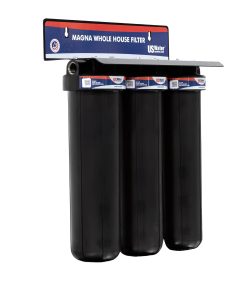
If space is tight and you want a clear, cartridge-based routine, the Magna Compact earns its name among the best whole house water filtration systems picks. The system mounts to a wall bracket and keeps the setup neatly contained, so you end up with a cleaner utility area instead of a floor crowded with tanks.
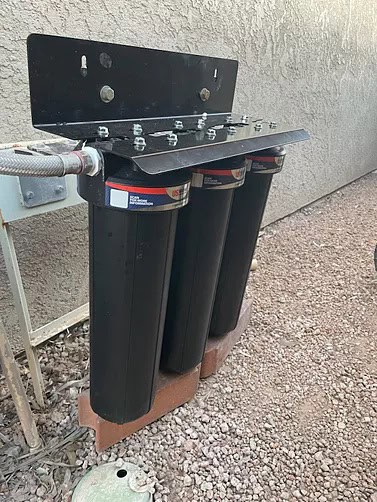
The build focuses on sturdy plumbing connections. You’re working with reinforced polypropylene housings and stainless-steel threading, which supports a more “installed” feel once everything is connected and tightened down.
Treatment stays straightforward and practical. It uses a sediment filter plus a carbon filter, so you address cloudiness and reduce chlorine taste and odor across the home. [3] In daily use, you notice the difference at the kitchen sink and in the shower—water tastes cleaner and smells less sharp.
This system adds a salt-free anti-scale cartridge that releases a food-grade polyphosphate micro-film. The point of that design is to make minerals less eager to cling to pipes and fixtures, so you spend less time fighting that chalky film around faucets and shower glass.
It’s rated for 15 GPM, so the system is built to keep water moving when multiple fixtures run. It also runs without electricity and doesn’t send water to a drain line, so you get a simple “turn on the tap and go” ownership experience. The housings use a double O-ring seal, which helps the bowls stay leak-resistant where it matters most.
Maintenance is built around quick cartridge swaps rather than tank service. In normal city-water use, the sediment and carbon cartridges typically fall into a 6–12 month window, and the anti-scale cartridge typically runs about 6–9 months. The cartridges are color-coded and designed for fast change-outs, so the routine fits into real life instead of taking over your weekend.
Pros
Cons
This buyer’s guide helps you narrow the field—because whole house water filtration system reviews only feel useful when you map them to your own water problems, flow needs, and maintenance style.
The fastest way to choose is to name the problem that pushed you to start shopping. If the main issue is disinfectant taste and shower odor, systems that emphasize carbon-based treatment and chlorine reduction will feel immediately relevant in everyday use.
If scale and spots are what you’re tired of cleaning, pay attention to whether a system includes a salt-free scale-control approach. That kind of design focuses on keeping minerals from sticking stubbornly to fixtures, so the payoff shows up when you wipe down faucets and glass. [4]
If fluoride is a core concern, you’ll want a system built around media intended for that job. Choosing a setup that directly targets fluoride keeps your decision aligned with your real priority instead of hoping a general-purpose filter covers it.

Whole-house filtration only feels “invisible” when the water still moves like it should. If you regularly run showers, laundry, and dishwashing close together, higher flow ratings and bathroom-based sizing become more than a spec—they become the difference between a comfortable shower and a weak one.
Some systems make sizing easy by tying flow to bathroom count, which keeps the choice grounded in the way a home actually uses water. Others give you service flow ranges depending on the capacity you select, so you can pick the option that fits your usual demand instead of guessing.
When you pick a flow profile that matches your routine, the system feels like part of the house rather than a constraint. You turn on water the way you always do, and the treatment happens in the background.

Maintenance isn’t just “how often you change a filter.” It’s how the system fits into your life. Cartridge-based setups give you a predictable swap routine, usually in defined month ranges, and the change-out can be quick and tidy.
Tank-style systems tend to focus on long media life and may include automatic backwashing. That style suits you if you want the system to keep itself refreshed on a schedule or by usage, with fewer “hands-on” moments in between.
A good rule is to choose the routine you’ll actually follow. A simple cartridge swap on schedule beats a more complex setup you avoid maintaining.

Some systems are built as platforms you can grow into, which matters if you’re aiming for the best whole house water purification system path over the long term. If you expect your needs to change—or you want to stack treatment types—look for setups that support add-ons like UV disinfection, leak detection, oxidation systems, or pairing with a softener.
Expandability matters because it can keep you from replacing everything later. Instead of buying a brand-new system, you add a component that fits the existing lineup when your priorities shift.
If you already know you want a broader whole-home chain, choosing a system that supports add-ons from the start keeps your setup cleaner and more cohesive.

Installation style affects how ownership feels every time you look at your utility area, especially if you’re trying to pick from the best whole house water filter system setups for your space. A compact wall-mounted system helps when floor space is limited and you want everything neat and contained.
Larger, tank-based systems often feel more like a permanent home upgrade, especially if you prefer long media life and automatic routines like backwashing. The right choice comes down to what fits your space and what feels manageable for access and upkeep.
When the install matches your home layout, maintenance stays easier and the system feels less intrusive over time.
Related Guide: Best whole house water filter for well water
If you want a simple, long-life whole-home setup that’s easy to size by bathroom count, SpringWell is a strong fit—especially if you like clearly defined maintenance intervals and the option to add UV at 15 GPM with a 30 mJ/cm² dose.
If fluoride drives your decision, SoftPro is the most directly aligned with that goal, pairing bone char carbon with catalytic carbon while keeping ownership low-intervention with no electricity or chemicals required.
If your household needs strong flow and you want a long replacement horizon, Aquasana Rhino Max Flow stands out with a 14.0 GPM rated flow and a 1,000,000-gallon or up-to-10-year rating, plus a defined pre/post-filter routine.
If you prefer a configurable platform with automatic backwashing and capacity choices, Crystal Quest SMART gives you multiple routes—capacity options, timer-based backwash, a metered option, and the ability to build toward a broader whole-home stack.
If you’re working with limited space and you want quick, predictable cartridge swaps in a compact wall-mounted format, the US Water Systems Magna Compact fits that practical, tidy lane.
At this point, the best move is to pick based on your home’s flow needs and the specific issue you’re trying to solve—taste and odor, scale, fluoride concerns, or a broad whole-house approach. Scroll back up to the product list, match the system style to your routine, and you’ll end up with the top rated whole house water filter that feels easy to live with every single day.